
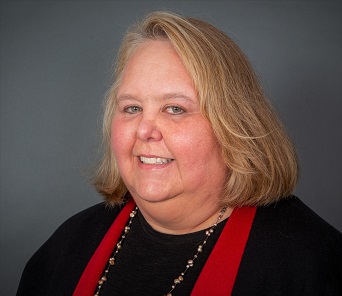
 My Road to RIM and the ICRM
By: Caroline J. Walters, CRM
Sometimes I wonder how I got here. Truly, it’s not like being President of the ICRM or being a Records Manager at a major research University was in the plan. When I left high school, I wanted to be an actuary. I wanted to run statistical models and figure out what the possibilities were of events happening. I got bored with the college courses for statistics, and changed my major to Art History, although I really had no idea what I wanted to do.
I left school and started working in all kinds of jobs, but the one skill I had was organization. Back then it was all paper and boxes. I worked at an architecture firm, preparing specifications for all the projects, and answering the phones. They had a basement in the building where they had all their really old, old, and not so old project plans. It was a mess, and no one could find anything, so I cleaned it up. I set up a system for check-in/check-out, and properly labeled and inventoried the plans.
I was finishing an undergraduate degree in history at NC State while working full-time and had some classes with graduate students in the Masters Public History Program. There were two tracks, Archives/Records Management and Museum Studies. I liked the idea of doing the archives/records management track, and decided to quit my full-time job, and go to graduate school full-time for two years. Being in my mid 30’s this was super challenging, as I was single, owned a house, and had bills to pay. I ended up taking out loans and finding a part-time job with the North Carolina Library Association. My first foray into professional associations.
After graduation, I found a job at the North Carolina State Archives in the records management section. I really wanted to be an archivist, but thought you had to start somewhere. I worked as a records analyst in county and local governments. The archivist positions were always competitive, and although I applied, I never got one, but I was enjoying the records management work.
When UNC-Chapel Hill had an opening for a records manager, I jumped at the chance. I loved working at UNC. The town and campus are beautiful, and I wanted to head back there. Reporting to the University Archivist, buried in the library structure was not great. I had no budget, no real power and couldn’t make the change I really wanted. I did what I could and made connections with IT and especially Information Security.
I was heartbroken when I asked for $1000 a year in funding to buy promotional materials about records management, and I got a firm “Don’t Hold Your Breath.” I decided that day I was worth more than what they were paying me, and more than how they valued me. So, I started a search for jobs.
I found three, all at universities. I applied and the following week I had phone interviews. The University of Virginia had spent time doing a review of records management and decided RIM needed to report to information security. After my year working with UNC’s information security, I thought this would be a great fit.
One of the requirements of the UVA job, was a CRM or be a candidate. Before my in person interview I submitted my ICRM Application to be a candidate and my five year clock started. Three months later I was moving to Charlottesville, VA, another beautiful college town, creating a RIM program from scratch and starting my study for the CRM.
I started my CRM journey with a prep course at the ARMA Conference. Two days of mind-numbing information on the contents of the exams, including a practice exam for Part 6. To say I was overwhelmed was an understatement. I attended two more prep sessions on the Parts 1-5 exams before getting the courage up to take the exams.
Back then you took the exams at a Pearson Vue test site, and the closest to me was an hour away. I decided to take all 5 multiple choice exams over a three-day period and booked a hotel close to the test site.
After taking the first exam I learned that the Pearson Vue site had a problem with their system, and I would not get my result right away. I came back the first day in the afternoon for Part 2, not knowing if I had passed Part 1. The next day, I checked the ICRM website, and I passed both. That continued for Parts 3 & 4 the second day, and on the third day I took Part 5.
As it was February, I was worried about driving home in a snowstorm expected that day, so after I had answered all the questions in Part 5 and reviewed them twice, I left 15 min on the clock and left the exam. The next morning, I learned I failed! If I had only stayed and reviewed one more time, I may have changed some answers and passed.
This delayed my plan to take Part 6 in June and I had to retake Part 5 at the next test cycle. Fortunately, I passed. So, it was time to prep for Part 6. I found a prep for Part 6 in Michigan in August, and my boss kindly agreed to cover my travel, so off I went to Michigan.
I had no idea I would be the only person there preparing for Part 6 only. This is where I spent the entire day with Debra Gearhart, who I’d seen doing the ICRM prep courses previously, but this time it was just me and Debra.
I wrote two Part 6 exams that day. Debra gave me some good feedback from the morning, and said I was doing well. After I finished the second question, she came back with her review, and said “Go take the damn test.” She then talked to me about how I was a good writer (I’m still not sure about that one), and said after I passed, she would recommend me to write Part 6 questions. I thought she was joking.
I took Part 6 in November and received my letter saying congratulations you’re a Certified Records Manager on Christmas Eve 2011.
About 6 months after I got my CRM, I got a phone call from Sharon LaPlant. Sharon was the Regent for Exam Development and wanted to talk to me about being a writer for Part 6. Wait? What? Seems Debra Gearhart had waited to see my name on the CRM list and told Sharon I’d be a great writer.
A year from my day-long Part 6 prep with Debra, I was flying back to Michigan to join the Part 6 writers. I was told to prepare one question for review. The people in the room were so impressive – Dave McDermott (President of the ICRM at the time), Debra, Blake Richardson (author of Records Management for Dummies), Beth Canter (long time Part 6 writer), Andrew Ysasi (writer for Part 5) and Kiersten McAvoy (ICRM Board member). To say I was intimidated would be an understatement.
I presented my question, which the team quickly tore to shreds. The group, with me editing, rewrote the question into a good Part 6. It was a great learning experience, but it was also soul crushing. I didn’t show disappointment that my question was not up to the ICRM standards. We ended up with a great question, it was approved, and the team clapped for me as we took a break for lunch.
I skipped lunch with the team, saying I needed to catch up on emails and wasn’t very hungry. I went to my hotel room and cried because I thought I would never be good enough to write Part 6 questions, and that the people in that room – all accomplished and smart – would be asking themselves, why is she here? I seriously thought about resigning from the EDC as I was not good enough, but Beth told me at the end of the meeting I did great, and would be a good writer, so I stayed.
I think the biggest lesson I learned was to leave my ego at the door with the Exam Development Committee. Over the next few years, reviewing questions became easier and easier, and I was always thankful for the reviewers I worked with, as we always ended with a better question. I also had some great laughs, especially with Sharon and Nick DeLaurentis.
At the end of 2017 I got the call from Wendy McLain (President) and John Kyrsa (President-Elect), to see if I would take on the role of Regent for the EDC, as the current Regent had resigned. I was pleased to learn I was not their first choice; I know that’s weird. They had reached out to several other members of the EDC with more tenure before asking me.
I took the job and started four years of service as the Regent for Exam Development. During those four years so many changes happened, including, year-round testing for Parts 1-5, moving the exam development database to Prolydian and then with COVID, we took the exam prep and the exams online in a matter of months. I strengthened the Exam Development Committee with the creation of assistant writers, who would support the main lead writer for each part with reviews and updates.
After all this, I really questioned whether I should step into a leadership role. I know that I’m not well known, and I don’t try to be. Tooting my horn is not something I do much. I am glad I ran for the President-Elect/President/Chair position.
As I serve in the President of the ICRM role for 2023, my goal is to leave the organization with some great leaders and to set up some sustainable processes that recognizes and respects volunteer time. I’m happy to report that the current board is an amazing group of people, and many of our committee members are looking to take on board roles as terms expire. I want to make it easy for volunteers to give time while also having paying jobs and lives.
I have met so many amazing CRAs and CRMs during my time with the ICRM, who have become colleagues, resources, and friends. I’m grateful for their time, effort, and support.
When my term ends in 2025, I will enjoy some down time from the ICRM, but I will stay involved: grading Part 6 (haven’t done that yet because as a writer we were not allowed to grade); stay involved with some RIM partners, like NAGARA, and I will always promote the ICRM certifications.
The ICRM is always looking for volunteers, and all volunteers get CMPs for the time they give. Opportunities abound with mentoring, marketing, exam development, and our academic, RIM and specialty partners. If you are interested, please email admin@icrm.org and our amazing Administrator Meghan will connect you to the committee lead.